
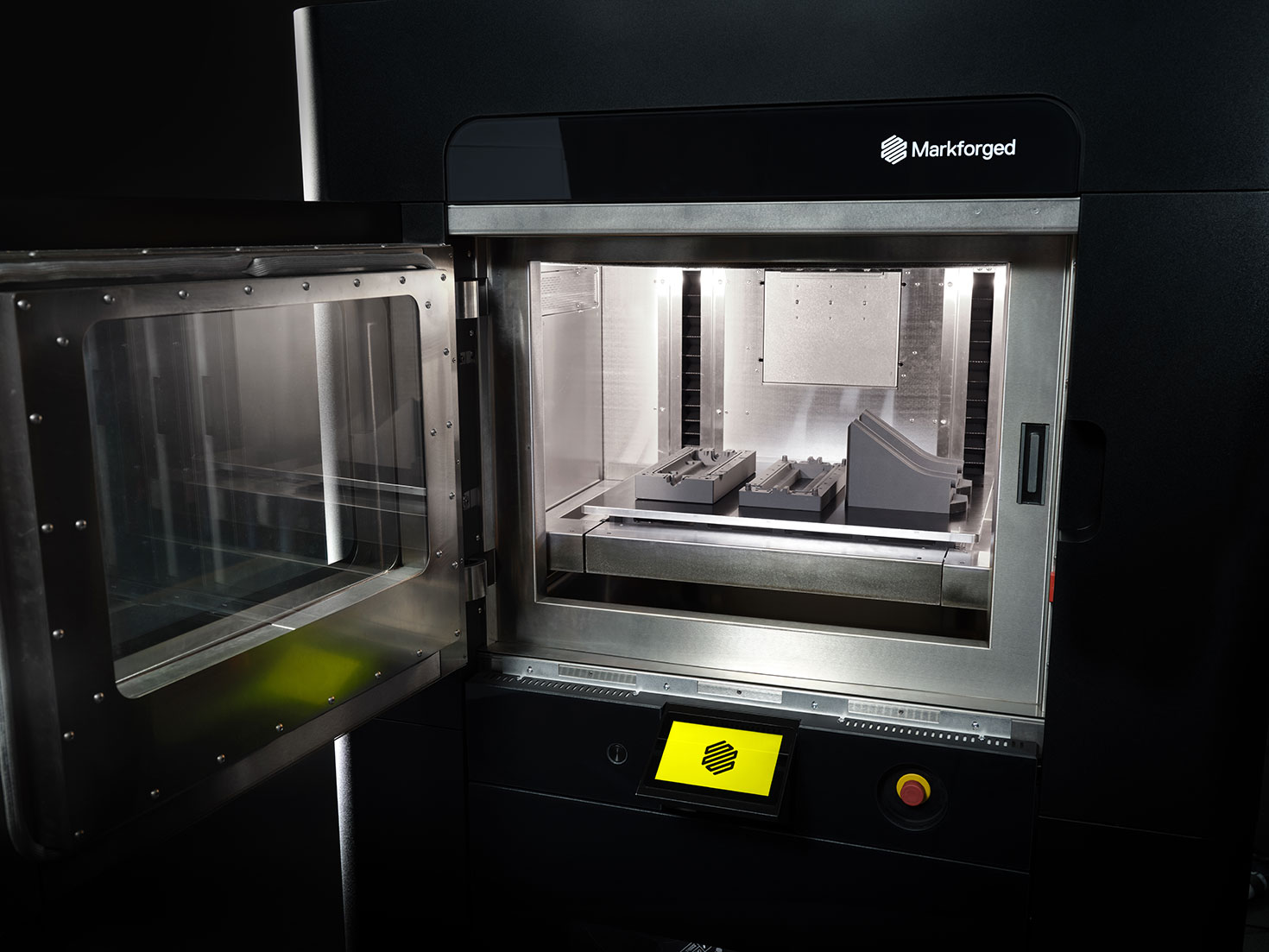
Fused Filament Fabrication (FFF) is a versatile and accessible 3D printing technology. FFF has transformed the landscape of additive manufacturing, offering a blend of accessibility and precision that’s hard to match. At NDC Plastics, we’re harnessing this technology to deliver cutting-edge solutions for our clients. The primary reason for FFF’s success is its ability to produce remarkably accurate and well-detailed products in an easy and cost-effective way. This post will give you a brief rundown on FFF technology.
What is FFF Technology?
FFF is a 3D printing process that creates objects by depositing melted material, typically thermoplastics, layer by layer. This method uses the same materials found in conventional thermoplastic manufacturing, such as ABS and Nylon, making it a familiar and cost-effective choice for many industries. Our 3D printers can also utilise continuous strand fibre-reinforced options offering similar strength to some metals!
How FFF Works: A Simple Yet Ingenious Process
Here is a simplified version of the FFF process
- Design: A 3D model is created using CAD software and exported as an STL file. We can create this for you if needed (see here).
- Preparation: Slicing software is used to configure printing parameters and generate the print instructions.
- Printing: The printer then melts the filament and deposits it precisely, building your object layer by layer.
FFF 3D Printing Uses
Let’s look more closely at the applications of FFF 3D printing
Manufacturing
With faster lead times than outsourcing and a wide range of engineering materials, FFF 3D printing is used widely in manufacturing industries. 3D printers deliver rapid tooling and replacement parts to maintain maximum uptime and productivity on the production line. They are also used to flexibly create end-use parts, such as bespoke quality gauges or small batch first runs, to speed up time to market of a product
Automotive
Automotive manufacturers and service facilities use FFF 3D printing for prototyping as well as producing end-use and replacement parts. It enables the creation of intricate designs and custom components, reducing the need for expensive tooling and speeding up the development process.
Medicine
In the medical field, FFF 3D printing is used to create customised prosthetics, implants, and anatomical models for surgical planning. It allows for personalised healthcare solutions, improving patient outcomes and reducing costs.
FFF vs. Other Technologies
You may have heard of the term Fused Deposition Modeling (FDM) . FFF and FDM are often treated as the same technology, in short, there is not much difference between the two. Technology like SLA (Stereolithography) offers its own advantages, however, FFF provides an excellent balance of cost, ease of use, and material properties. For many applications, FFF is the ideal choice for production and rapid prototyping.
Taking Your Manufacturing to the Next Level
Are you ready to harness the power of FFF 3D printing for your business? NDC Plastics offers cutting-edge Fused Filament Fabrication solutions that can streamline your production processes and boost innovation. Don’t miss out on the opportunity to transform your manufacturing capabilities. You can visit our 3D printing page to learn more about our FFF 3D printing services.
Contact our team of experts to discover how FFF 3D printing can revolutionise your production processes and give you a competitive edge in your industry.